
Water accumulation in the storage tank of a screw air compressor is a common issue. Understanding the function and working principle of the storage tank helps explain why this occurs. The tank serves as a buffer, reducing pressure pulses, stabilizing voltage, and preventing the compressor from repeatedly starting up, which in turn reduces energy consumption. While water accumulation is normal, it’s important to manage it effectively to maintain air quality and prevent corrosion. Below, we’ll explore three practical methods to address water accumulation in compresseur d'air à vis storage tanks.
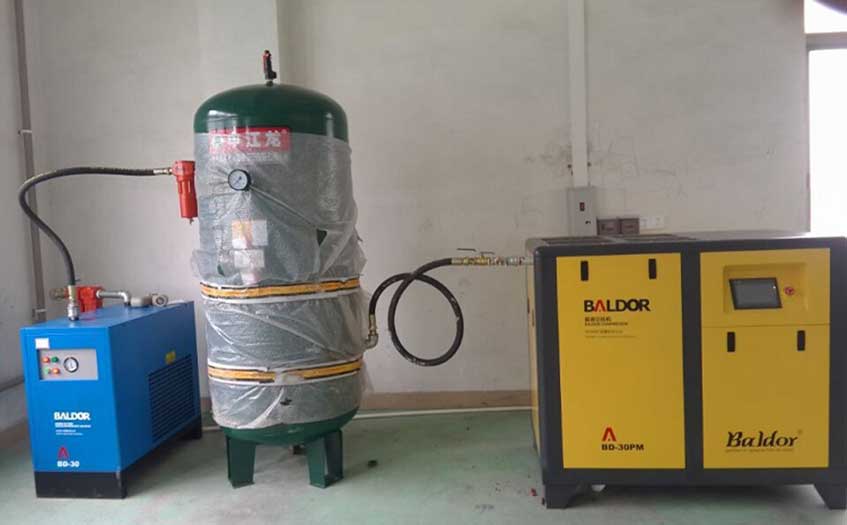
Why Does Water Accumulate in the Storage Tank?
After compression, some of the air is stored in the storage tank. Since air naturally contains moisture, when these fast-moving water molecules come into contact with the tank walls, they condense into water. Over time, this results in water buildup at the bottom of the tank. While this is a normal occurrence, it’s essential to remove the accumulated water regularly to avoid potential damage to the equipment and degradation of air quality.
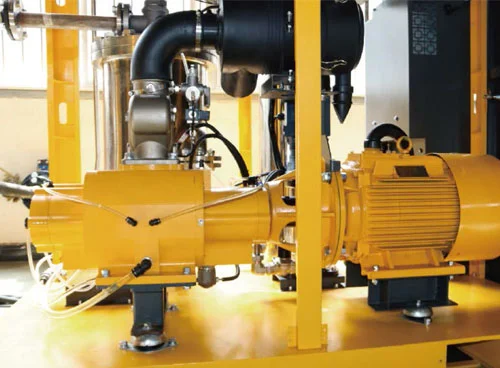
Three Methods to Address Water Accumulation in the Storage Tank
1. Install a Water Separator in the Storage Tank
A water separator is an effective way to remove moisture from compressed air. By installing one in the storage tank, you can separate the water from the air, ensuring that only dry air enters the system. This will not only improve the air quality but also protect the equipment from corrosion caused by moisture.
2. Use an Automatic Drain Valve for Regular Water Removal
An automatic drain valve is a critical component for efficiently removing accumulated water from the tank. It’s essential to choose a high-quality valve, as low-quality valves are prone to clogging. Regular maintenance and checking the valve can help ensure continuous water drainage, which is vital for preventing water buildup and maintaining the efficiency of the compressor system.
3. Ensure Proper Piping Design for Effective Water Drainage
Proper piping design is crucial for preventing water accumulation in the storage tank. Ideally, the compressed air piping should have a slight incline of about 1 degree to allow water to flow naturally toward the drainage point. Additionally, the pipe leading into the storage tank should be positioned above the inlet, with a 180-degree bend pointing downward before connecting to the tank. This design ensures that water collects at the lowest point and can be easily drained.
Conclusion
Managing water accumulation in compresseur d'air à vis storage tanks is essential for maintaining optimal system performance and air quality. By installing a water separator, using an automatic drain valve, and ensuring proper piping design, you can prevent water-related issues and prolong the life of your compressor. Regular maintenance and monitoring are key to ensuring your equipment operates smoothly and efficiently.
For more information on maintaining screw air compressors and other des solutions efficaces sur le plan énergétique, visit Baldor Air Compressors.